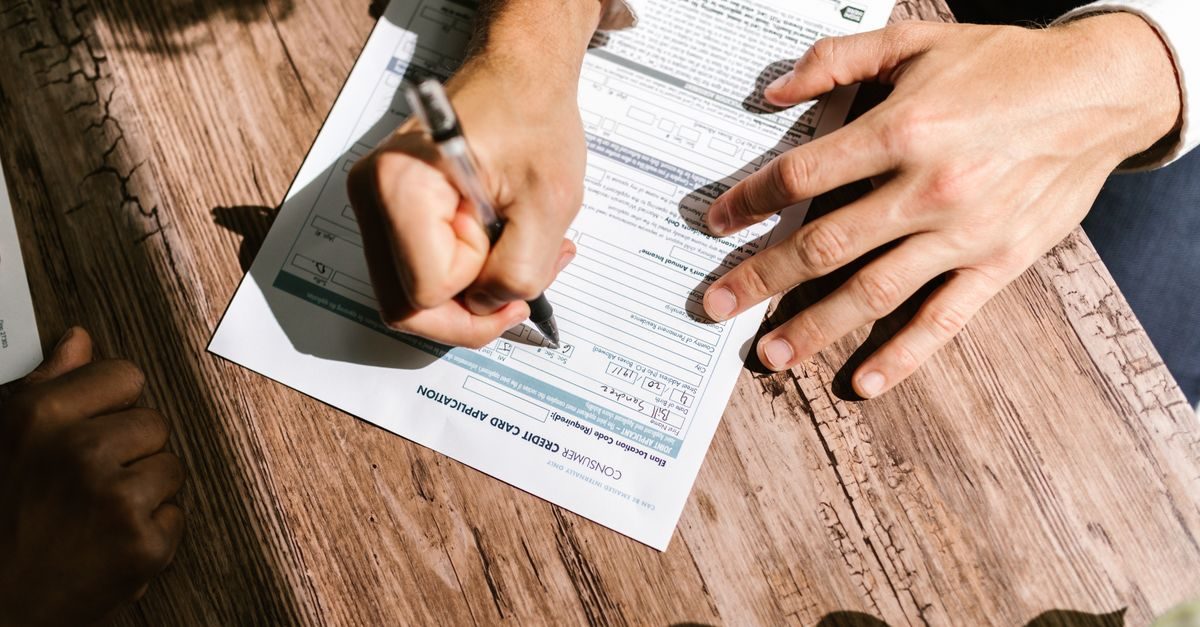
APR vs interest rate: which number tells you the real cost
Why the lower advertised rate can be the more expensive loan.

On this page
- Why the two numbers separate
- Comparing two offers properly
- Three rules for comparing
- Where APR still understates the cost
- Why the fee costs more than it looks
- Fixed versus variable, and what APR does not capture
- The questions that expose the real cost
- Where APR is genuinely misleading
- Frequently asked questions
The interest rate is the cost of borrowing the money. The APR is the cost of borrowing the money plus the required fees, expressed as a yearly percentage. When they differ, the difference is fees, and the APR is the honest number.
Why the two numbers separate
Many loans charge an origination fee, often deducted from the amount you receive. You borrow $10,000, $400 is taken as a fee, $9,600 lands in your account, and you still repay interest on the full $10,000. Your interest rate has not changed, but your real cost has.
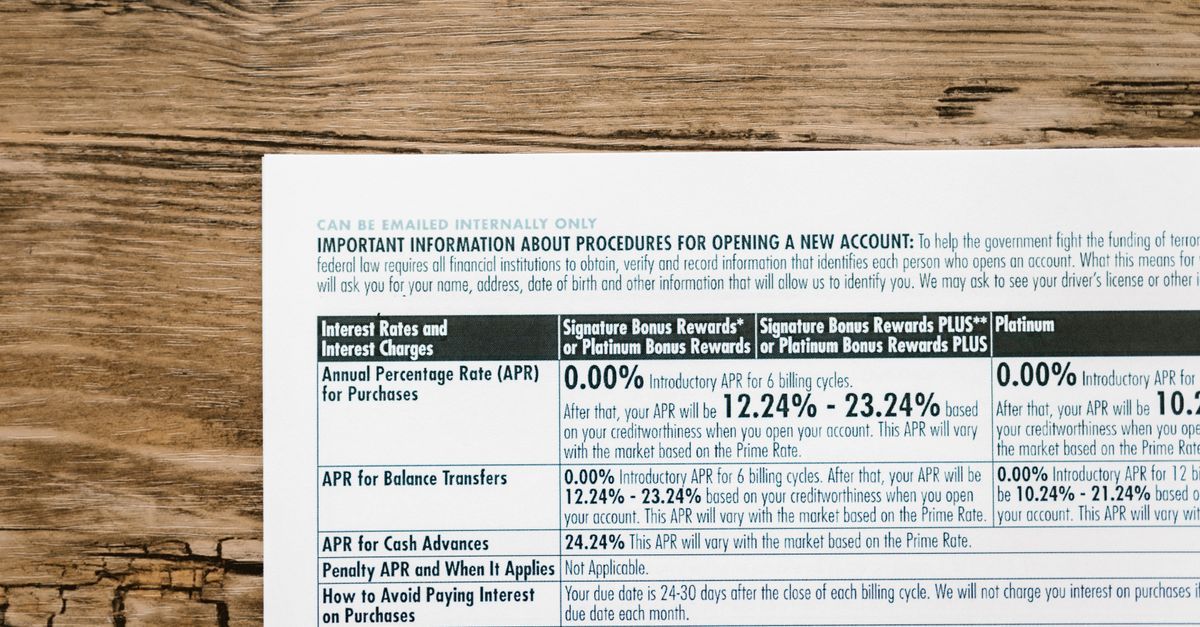
APR folds those required charges into a single annual percentage so two offers can be compared on one number. This is why APR is the figure lenders must disclose.
Comparing two offers properly
A lower interest rate with a large fee can cost more than a higher rate with no fee. The only reliable comparison is APR over the same term.
| Offer A | Offer B | |
|---|---|---|
| Amount borrowed | $10,000 | $10,000 |
| Interest rate | 10.0% | 11.5% |
| Origination fee | 5% ($500) | None |
| Cash you receive | $9,500 | $10,000 |
| Headline that looks better | Offer A | |
| Which is actually cheaper | Offer B |
Offer A advertises the lower rate and is the worse deal, because you pay interest on $10,000 while receiving $9,500. The APR is what exposes that.
Three rules for comparing
- Compare APR to APR, never rate to APR. This is the most common mistake.
- Hold the term constant. A longer term lowers the monthly payment and raises the total. Comparing a 36-month offer to a 60-month one tells you nothing about which is cheaper.
- Look at total cost, not the monthly payment. Run both through a payment calculator and compare what you pay in total.
Where APR still understates the cost
APR captures required charges, but not optional ones and not everything that can happen later. Watch for prepayment penalties, late fees, and on credit cards, a separate and higher APR for cash advances with no grace period. On a variable-rate loan, the APR reflects today rate, not tomorrow.
Why the fee costs more than it looks
An origination fee deducted upfront does two things at once, and only one is obvious. You receive less money, and you pay interest on the full amount anyway. That is why a 5% fee is not equivalent to 5% of extra interest spread over the term.
Take the Offer A example above: $10,000 borrowed, $500 fee, $9,500 received. If you actually needed $10,000, you now have to borrow more to get there, which increases the fee again. The effective cost of the fee rises the shorter the loan term, because the same fixed charge is spread over fewer payments.
This is the practical reason APR exists as a disclosure. Without it, a lender could advertise almost any headline rate by shifting cost into fees.
Fixed versus variable, and what APR does not capture
| Fixed rate | Variable rate | |
|---|---|---|
| Rate over the term | Unchanged | Moves with an index |
| What the APR tells you | The cost for the whole term | The cost at today rate only |
| Payment predictability | Known from day one | Can rise or fall |
| Comparing two offers | APR is directly comparable | APR is comparable only at this moment |
Comparing a fixed APR to a variable APR is not a like-for-like comparison. The variable figure is a snapshot, and a lower variable APR today can become a higher cost later. Whether that is acceptable depends on the term length and how much payment certainty is worth to you.
The questions that expose the real cost
- What is the APR, and is it fixed or variable? Get both answers together.
- What is the origination fee, and is it deducted or added? Deducted means you receive less; added means you owe more.
- Is there a prepayment penalty? This decides whether paying early actually saves you money. See the payoff maths.
- What is the total of payments? One number that captures everything, and the hardest to disguise.
- Is the quoted rate conditional? Some advertised rates require autopay enrolment or a specific term.
If a lender will not state total cost of the loan in dollars, that is information in itself. Run it through our calculator to work it out yourself.
Where APR is genuinely misleading
APR assumes you keep the loan for its full term. If you expect to repay early, a loan with a high upfront fee and a low rate looks better by APR than it will actually be, because the fee is spread across a term you will not complete. For loans you intend to clear quickly, compare the actual total cost over your expected holding period rather than the stated APR.
Frequently asked questions
Is APR always higher than the interest rate?
It is equal when there are no required fees, and higher when there are. It should never be lower.
Which number do lenders advertise?
Usually whichever is more flattering, which is the interest rate when there is a large fee. The APR is normally disclosed in the terms.
Does a credit card have an origination fee?
Typically no, so on cards the purchase APR and the interest rate are usually the same. Balance transfers and cash advances are where the extra costs appear.
Does a lower APR always mean I pay less?
Only over the same term. A lower APR over a much longer term can still cost more in total interest.
Is a 0% APR offer really free?
During the promotional period, on the balances it covers, yes. Check what happens afterwards, whether a transfer fee applies, and whether new purchases are covered.
Why is my credit card APR so much higher than a personal loan?
Card debt is unsecured, revolving, and can be drawn at will, so it is priced for higher risk. A personal loan is a fixed sum with a fixed schedule.
What is a good APR?
It depends on the loan type and your credit profile. The useful comparison is between offers available to you at the same term, not against an abstract benchmark.
Does APR include insurance a lender adds?
Required charges are generally included; genuinely optional products are not. If a lender presents an add-on as required, ask whether the APR reflects it.

Written by
Teja PagidimarriTeja Pagidimarri built 43dots to answer money questions with numbers you can check. He is a software developer, not a licensed financial advisor, so every guide here is built the way an engineer would: figures pulled from the primary source, math shown in the open, and the calculators built from the actual published formulas.
Every figure on this page was checked against the primary source linked beside it. Drafting is AI-assisted; the research, the numbers, and the final edit are mine. See our editorial policy and corrections. This is general information, not personalized financial advice.
Comments
No comments yet. Start the conversation.
Money, minus the jargon.
Plain-English guides to US taxes, credit, cards, and loans. Every figure traced to its primary source, with the math shown so you can check it.
Read more guides